
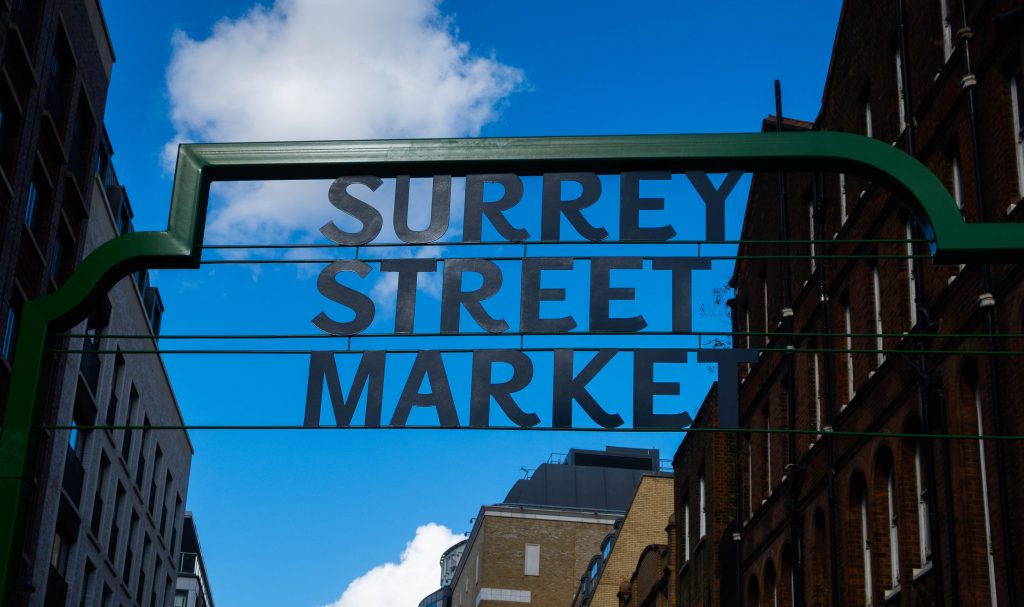
This post is supplementary to an earlier account of my recent visit to my home town of Croydon. Situated just off the High Street, the market is a timeless corner of the town, rich with memories from my childhood and adolescence. In some ways, it is my Manderley. To paraphrase Daphne Du Maurier…
“Last night I dreamt I went to Surrey Street Market again.”
Before looking at some of the tricks of memory, let’s look at the history of the market. It is one of the oldest street markets in Britain, with records of trading here going back to medieval times. A charter was granted in 1276 by Edward I following a request from Archbishop Robert Kilwardby. I suppose even Archbishops needed their five a day. Croydon Palace had long been an official residence for the Archbishops of Canterbury. The charter allowed for trading on one day a week. Further charters were issued in 1314 and 1343. The market was granted the right to trade for 6 days a week in 1922 when the running of it was taken over by Croydon Corporation.
The market originally covered a triangular plot near the High Street and Crown Hill. The higher level east side specialised in trading corn while the lower west side focused on livestock, meat and hides. This was known as Butcher’s Row (or Fleshe Market) but is now Surrey Street. The market was confined to this street in the mid-nineteenth century when the High Street was widened.
As I turned off the High Street, I expected the market to be directly opposite me, the street descending into an old world that assaulted one’s senses with colours, smells and a cacophony of street cries. However, I had to turn another 90 degrees to my right to see the entrance to the market. This was the first example of a mismatch between my memory and reality.
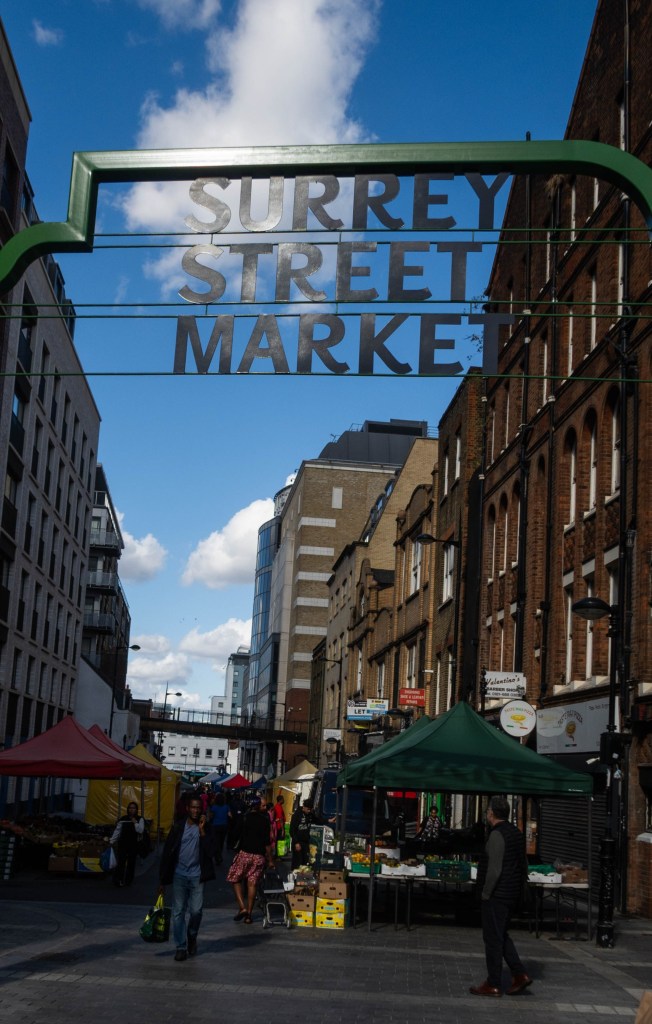
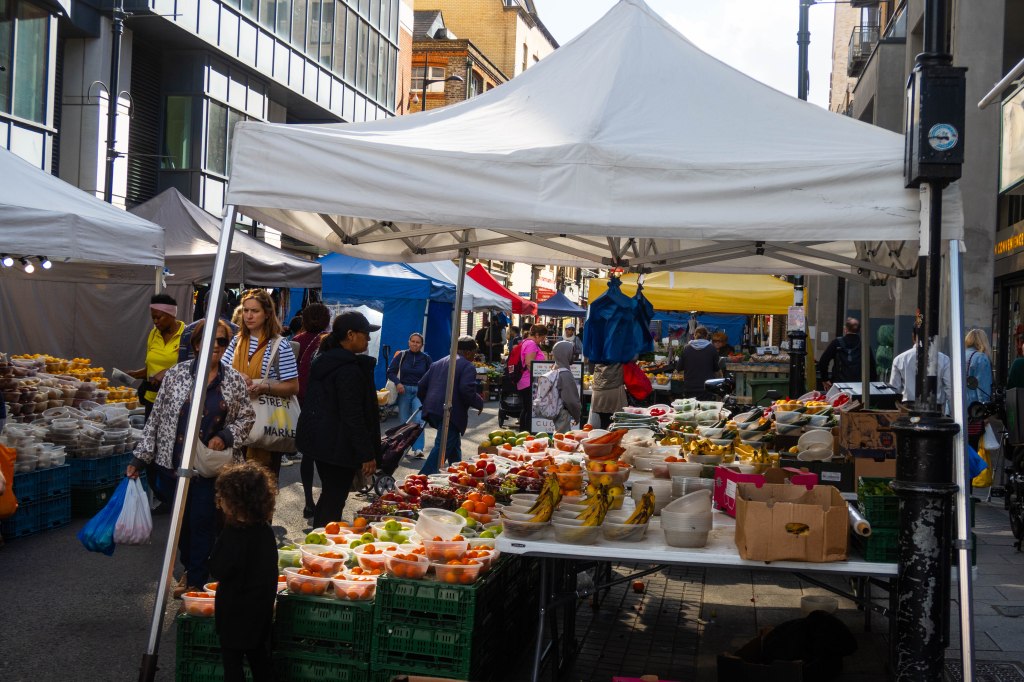
I did not expect the market to be exactly how it was all those years ago, but I hoped it retained some of the essence of what it used to be. Recent refurbishments, the comings and goings of different businesses, and the presence of fruit and vegetables that were not part of our diets in the 1960s, certainly contributed to a different feel.
I think the time of day was also significant. I remember the market towards the end of the day, when vendors were eager to sell what remained of their goods, and the smell of rotting fruit and vegetables hung in the air so thickly that you could almost taste it. Heavy rain on a late winter’s afternoon made it feel sad and dismal, with rain glistening on the street and rooftops while drenched shoppers struggled to see through the mist. It felt a long way from home, from anywhere, and disconnected from time.
Finally, and perhaps something we overlook, we have a different visual perspective now. In the olden days, when we were smaller, we viewed everything from closer to the ground. We wouldn’t have been able to look over the bar of The Dog (previously known as The Dog and Bull, and previous to then as The Bell in the thirteenth century), the oldest pub in Croydon with parts of the structure dating back to 1431.
Notwithstanding the above, Surrey Street clearly remains at heart the street it has always been. But it is not always about outward appearances, you have to probe deeper to feel those connections to the past – both at a personal level and as a community. It is still a lovely and vibrant little gem in the town.
Please feel free to leave comments or share your memories of the street market.

